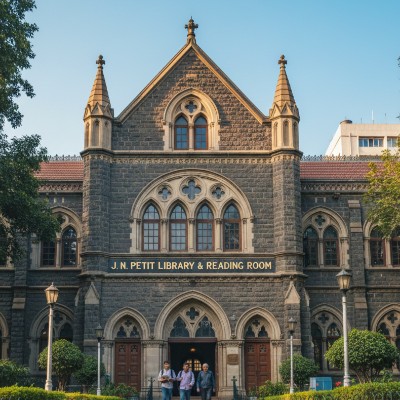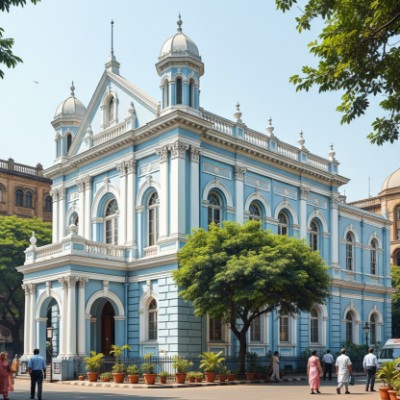
The Asiatic Society Library, one of Mumbai’s oldest and most distinguished institutions, traces its origins to the early 19th century. Established in 1804 by the Asiatic Society of Bombay, it was created to promote oriental studies and preserve rare manuscripts, books, and artefacts.
The magnificent Town Hall building that houses the library was completed in 1833, becoming a central landmark of the colonial-era city. Over the centuries, it has played an important role in documenting India’s cultural, historical, and intellectual evolution.
The Asiatic Society Library combines historical significance with tangible metrics that help visitors appreciate its scale and importance. Below are quick facts for a fast scan, followed by short context to explain what these numbers mean for a visitor or researcher. Name - Asiatic Society Library, Mumbai.
Established - 1804.
Town Hall building completed - 1833.
Collection size (approx.) - over 200,000 books, manuscripts and archival items.
Rare items - includes 15th–18th century manuscripts, early printed books (incunabula), historical maps and a notable 1477 edition of Dante’s Divine Comedy.
Numismatic collection - several thousand coins and medals spanning regional histories.
Reading rooms - 2 main public reading rooms and dedicated archive access on request.
Average visit duration - typical visitor spends 45–90 minutes exploring displays; researchers may spend multiple hours or days.
Visitor profile - a mix of students, researchers, history enthusiasts and tourists.
Heritage status - recognised as a protected heritage structure in Mumbai.
These figures give a snapshot of why the Asiatic Society Library is treasured: its deep and varied holdings make it a key research destination, while the compact, well-preserved setting makes it equally rewarding for casual visitors. The collection size and presence of rare items explain strict handling rules and occasional access restrictions for preservation. Allow extra time if you plan archival work or detailed study.
The Asiatic Society Library today continues to function as a living archive and scholarly institution while also opening its doors to the general public and tourists. Over the years, it has adopted gradual digitisation of its rare manuscripts and archival materials to preserve them for future generations. Restoration of old documents, conservation of fragile books, and modern cataloguing have enhanced accessibility for researchers.
The Town Hall building itself has undergone several restoration projects supported by heritage organisations and the Municipal Corporation of Greater Mumbai (BMC). These efforts maintain its structural integrity and preserve the white-pillared façade that remains one of the most photographed heritage sites in South Mumbai.
Today, visitors can view the main reading room, admire the grand staircase, and appreciate exhibits of selected rare items. The Society also hosts lectures, research discussions, and cultural events that promote awareness about history, archaeology, and literature.
Though access to certain archival materials is restricted to scholars and members, guided tours and supervised access sessions are available by prior arrangement. The library’s digitisation drive and heritage preservation programs ensure that the Asiatic Society remains both historically rooted and future-ready.
The Asiatic Society Library can be visited throughout the year, but the ideal time depends on your comfort and purpose of visit. Since it is an indoor attraction with limited outdoor exposure, it remains accessible even during the monsoon months. However, for a well-rounded heritage experience including the surrounding Fort area and Horniman Circle, cooler months offer the best ambience.
Recommended months:
- November to February – Pleasant weather ideal for walking tours around South Mumbai’s colonial precincts.
- March to May – Warm but manageable; suitable for short visits and researchers working indoors.
- June to September – Monsoon season adds charm to the white façade, though walking around may be less convenient.
- October – Transition month; less crowded and good for photography enthusiasts.
Best time of day:
- Morning hours (10 AM – 12 PM) – Calm and bright natural lighting for photography.
- Afternoons – Quieter, suitable for readers and scholars seeking concentration.
Tip: Combine your visit with nearby landmarks like Horniman Circle Garden, St. Thomas Cathedral, and the Reserve Bank of India Museum for a complete heritage trail experience.
Timings:
- Monday to Saturday: 10:30 AM to 6:30 PM
- Sunday & Public Holidays: Closed
Note: Access to certain sections (like the manuscript room or rare book archives) may be restricted to members or researchers with prior permission.
Entry Fee:
- General Visitors: Free entry (limited areas only)
- Researchers / Students: Membership or temporary pass may be required for detailed access.
- Photography: Generally not allowed inside the library; seek permission for academic or media purposes.
Facilities Available:
- Reading rooms with heritage furniture and archival lighting.
- Reference services for academic or historical research.
- Guided tours occasionally organised for visitors and heritage walks.
- Washrooms available within the Town Hall complex.
- Wheelchair access: Partial, due to the building’s historic staircase design.
- Security checks at the entrance for preservation reasons.
Membership & Research Access:
The Asiatic Society of Mumbai offers annual membership plans for scholars, historians, and enthusiasts. Members gain access to archives, journals, and special collections. Researchers can apply for special access through formal application.
The Asiatic Society Library is located in the Fort area of South Mumbai, near Horniman Circle Garden — one of the most accessible and well-connected heritage zones in the city. It lies close to several major transport hubs and landmarks, making it easy for both locals and tourists to reach.
By Local Train:
- The nearest station is Chhatrapati Shivaji Maharaj Terminus (CSMT) – approximately 1 km away (10–12 minutes’ walk).
- Churchgate Station (Western Line) is also nearby — around 1.5 km from the library.
By Metro:
- The Colaba–Bandra–SEEPZ Metro Line 3 (under development) will offer the nearest metro access in the future at the Hutatma Chowk station.
By Bus:
- Multiple Brihanmumbai Electric Supply and Transport (BEST) buses connect to Fort, Horniman Circle, and CSMT areas.
- Common bus routes: 103, 124, 137, 138, 145.
By Taxi or Car:
- Easily accessible by taxi or ride-sharing apps from anywhere in Mumbai.
- Limited parking available near Horniman Circle and adjacent streets.
By Air:
- From Chhatrapati Shivaji Maharaj International Airport, the library is roughly 23–25 km away.
- Taxi or app-based cab takes around 60–75 minutes depending on traffic.
Walking Access:
- The Town Hall steps face Horniman Circle Garden and are part of popular Fort Heritage
Walks.
- The area is pedestrian-friendly with well-preserved colonial architecture.
The Asiatic Society Library in Mumbai is not just a place for book lovers but also a heritage site that deserves a mindful visit. To make the most of your experience, plan your visit during quieter hours and respect the historical environment. Photography is restricted in certain areas, so always seek permission. Here are a few helpful tips for visitors:
The Asiatic Society Library in Mumbai appeals to both local and international tourists because of its heritage value, architectural charm, and scholarly legacy. Whether you’re a history buff, architecture admirer, or culture lover, this landmark offers a deep dive into Mumbai’s colonial past and intellectual heritage.
Visitors to the Asiatic Society Library in Mumbai will find plenty of dining choices around the Fort and Horniman Circle area. From traditional Irani cafés to modern bistros, this area offers a mix of affordable and upscale food experiences.
Must Try:
- Bun Maska & Chai at Yazdani Bakery
- Berry Pulao at Britannia & Co.
- Keema Pav at Café Excelsior
The Asiatic Society Library is not just a library but a living heritage landmark that showcases Mumbai’s colonial past and intellectual evolution. While visiting, tourists should keep a few points in mind to ensure a smooth and respectful experience.

5, Old Market, Ramesh Nagar,
New Delhi-110015. India
travelroutes.team@gmail.com
www.travelroutes.in